Journal 7
By: Carly Cornish
One of the communities I value is the community I have with my two other roommates in our apartment. This community represents peace, connection, and friendship. Even though we all have our own separate rooms, we’ll congregate in the living room or around the kitchen island and talks for hours while doing homework. The community grows when we have our other friends over who live in a different apartment complex. We support each other and pick each other up when we’re down. Our sense of family and our connection to one another is something I’d never want to lose, we’re closer with each other than we are with some of our own family members.
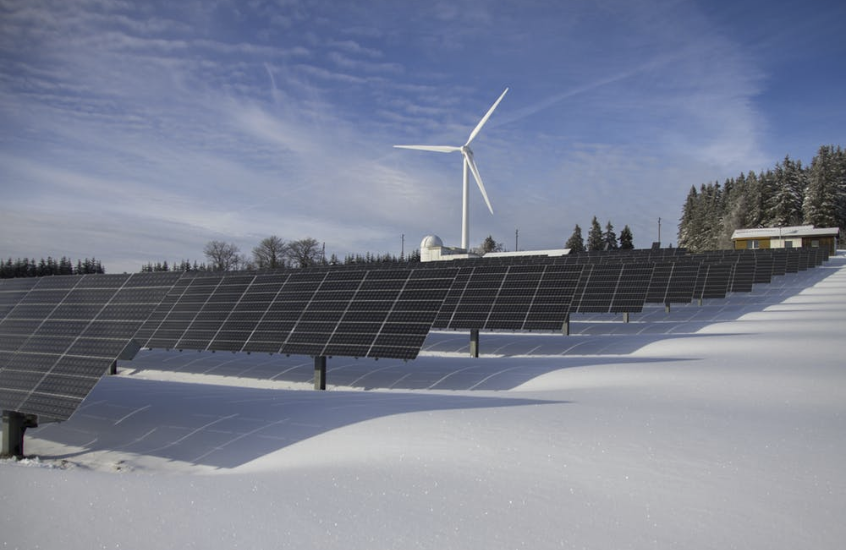
With this community in mind, I’d like to keep the technology of shelter and electricity. The technology of shelter is useful beyond its carbon footprint because of its versatility. A shelter doesn’t have a specific way of being built, there are many types with different materials for specific climates. An average house with two bedrooms upstairs and two “reception” rooms and a kitchen downstairs equals about 80 tons of CO2 emissions, however, this is with just the basic construction (The Guardian). It’s later made up for it by being made energy efficient that means less heating or cooling, which decreases the number of fossil fuels/other forms of power to keep the home warm or cool. A house or shelter can also be downsized into a tiny home, that will take up even less energy to heat or cool. On average a regular-sized home after being built creates 28,000 pounds of CO2 per year, a tiny house, on the other hand, creates 2,000 pounds of CO2. (Renewable Energy). Bringing a more digital outlook into this idea, these homes will have basic amenities, running water, lighting, heating, cooling, etc. A home or shelter doesn’t need to have smart devices or a TV, there are other ways of being entertained. Also, humans don’t need to have an A.I. cook their food for them, or make a smoothie, or identify the food in a microwave and calculate how long it takes to cook, etc. My roommates and I definitely don’t need smart refrigerators, microwaves or other appliances. We don’t even have a properly working dishwasher, the handle was replaced with a bucket handle, so we don’t generally rely on smart technology products unless it’s our phones or laptops for homework and studying. Secondly, keeping electricity would make sure that people’s daily lives weren’t changed to a point of complete discomfort. Electricity in its own right isn’t a problem, it’s what powers the electricity and what’s done with the waste products of it that’s the problem. In the United States, the percentages of electricity from fossil fuels is 99%, only a little under 1% comes from other power sources at a total of 1,763 million metric tons of CO2 emissions in 2018 (EIA). Fossil fuels are running out, they are not an easily renewable source of energy, it takes a very long time for petroleum, natural gas, and coal to be made in the earth. Other types of energy on our earth such as water, wind, and solar take more technology to turn into energy, such as solar panels, and turbines. When looking over these technologies you need to take into account 3 main aspects, the energy payback, the carbon payback, and its lifecycle. The energy payback is “the period of time in which a turbine needs to be run before it generates as much electricity as it consumes to function” (Swift Current Project). The carbon payback is “the period of time for which a wind turbine needs to be in operation before it has, by displacing generation from fossil-fueled power stations, avoided as much carbon dioxide as was released in its lifecycle”. Lastly, the lifecycle is “refers to the entire production cycle of a wind turbine: the extraction and manufacturing of raw materials and the subsequent manufacture of wind turbines, their blades, and towers together with their transportation, erection, operation, maintenance, dismantling, and disposal. In considering this one has to be aware that 80 percent of a wind turbine can be recycled.” (Swift Current Project). However, even as wind turbine seems like a good way to create electricity, it’s not with the amount of power to create the machine, retrieve the materials, and thermal generators to make it run when there is no wind, makes sure that a wind turbine will never be able to produce enough energy to disbalance the amount of CO2 emissions released in making and running it. Solar Panels, however, do not have carbon emissions from being run. But they do have emissions from being manufactured, both the process and the retrieving of materials. However, with the process becoming more efficient and power going into building it changing to cleaner energy, the amount of emissions produced by their manufacturing is decreasing. “The energy required to make a panel fell by around 12% and the associated carbon-dioxide emissions by 17-24 %,” (The Economist). So ultimately, the wind turbine is less efficient in decreasing the amount of CO2 emissions compared to the solar panel. Returning to my previous point, with electricity being produced by solar panels in the future, the idea of electricity being bad will fade away, as it no longer will be tied to CO2 emissions. Which will not only benefit my roommates and me but the world as well.
In order to protect this community, I would ban cellphones and smart appliances. Both of these rely on precious metals. Cell phones run wireless network servers and data centers, where smartphones can access certain information. This information accessing accounts for 319.2 million tons of CO2 a year (New York Report). My roommates and I mainly communicate with cell phones, so it would be difficult to ban such technology but we could work around it. However, if these network servers and data centers we powered by solar or a different renewable power source, then cell phones won’t be as bad. Smart appliances would have the same concept if the things powering them, providing the A.I. and other information were powered by renewable sources then it won’t be as much of a problem. However, being smart appliances would be far easier for my roommates and me, due to the fact that we don’t own any. Our microwave is just a regular old microwave, our washer and dryer don’t work well and our dishwasher has a bucket handle, so we won’t miss any smart appliances. This on a larger scale would not only help the environment but would help with people becoming more self-reliant and not lazy. Most people don’t need an A.I. to turn on their lights or their oven.
If I were to try and come to an agreement with my roommates about this situation, first we would sit at the kitchen island and talk about it. We would take turns talking about our opinions, and possible solutions for the problem. Once we understood where each of us was coming from, we would try to come to an agreement or at least a compromise. If this was to be done on a larger scale, I would suggest doing it like the Constitution says, with an amendment being proposed by Congress with a two-thirds majority vote in both the House of Representatives and the Senate. This could also happen by a constitutional convention with two-thirds of the State legislatures. However, the idea of a majority vote means that not everyone will get their way, but in society, there will always be at least one person unhappy with a situation.
Overall, the idea of regulating these could bring up problems similar to Prohibition. These could still strengthen capitalism, but the regulation would limit the field that capitalism is able to exploit. Humans would still be able to make money from resources, but the resources would be more regulated and renewable so the process wouldn’t be a line, it would be more of a circle, never-ending.
You must be logged in to post a comment.