
Exercise 1: Which is the new media solution?
For each of the following capstone ideas, identify which solution embodies the “many-to-many” principle, and explain why in one or more paragraphs. Be prepared to read your answer aloud in the next class.
Problem: A disappearing language
Ian Larson wanted to help preserve the Passamaquoddy language from extinction.
Solution A
Create a taskforce from a select group of Native American language experts, and ask them to write down a dictionary of words and their definitions. Enter these definitions into a database and build a Web site that allows anyone to search for terms and hear their pronunciation. Hire a high-profile Web designer and marketing firm to ensure that as many people as possible learn about this resource.
Solution B
Distribute laptops with video cameras to schoolkids in the Passamaquoddy community, and ask them to record their grandparents telling stories in Passamaquoddy. Upload these to a Web site along with the grandparents’ definitions of particular words used in the story, and make these words searchable via a tag cloud.
Answer:
On a first look, solution A with it’s mass-media approach seems to be the way to go. However, once one delves deeper, it appears that solution B is the better choice as it infuses the grammatical and definitive value of the words in the language with the intrinsic value of the words as spoken by the elders. Moreover, it uses the many-to-many approach by involving multiple generations within an entire community in place of creating a community out of experts that are not directly involved with the community.
Problem: Neglected Ruins
Evan Habeeb wanted to make people aware of the beauty of abandoned buildings.
Solution A
Assemble a film crew and visit abandoned homes, factories, and other buildings. Bring lights to illuminate these spaces dramatically, and record ambient sounds like dripping water. Edit the footage onto a DVD to create a compelling account that documents these relics for posterity, and distribute copies to historical societies across the state for their collections.
Solution B
Build a Web site that allows adventurers to print stickers they can leave behind in abandoned buildings they explore. Create the stickers so they can be scanned by a mobile phone to reveal a Web site built to feature photographs taken by those explorers.
Answer:
Solution A is a more simplistic approach to showcasing the beauty of abandoned edifices. Solution B on the other hand is a much more interactive experience by having the user go to the site itself and interact with other users over both time and space. Using stickers is both a non-intrusive and easy-to-use method as stickers are both low-profile when adhered to a surface as well as lightweight enough to carry. Furthermore, stickers with QR codes forces users to utilize their smartphone in order to access the photos. By having the smartphone already in the hand and as the main point of interaction, it increases the share ability of the site and the photos. However, the solution is limited as not all users may have access to a mobile network at the time and or may not have a QR reader installed on their smartphone.
Problem: Misunderstanding computer animation
Ryan Schaller and Jason Walker wanted to help people understand the many layers required to create a computer-animated film, including wire-frame, textures, and light effects. As a case study, they created an animation depicting a cartoon archeologist digging for ancient artifacts.
Solution A
Design and build a touch-screen interface that allows viewers to “rub” away layers of the film with their hands to reveal previous stages of the animation as it plays.
Solution B
Create an iPad application that documents each stage of the animation process, using stills from the archeologist film as illustrations. Explain techniques such as ray tracing, motion capture, and morphing. Include links to companies that create animation software such as Autodesk.
Answer:
Solution A is the more accessible approach of the two options given. While more simplistic and less robust in information, Solution A is more likely to engage people as it’s structured like a game. In concordance with that, Solution B is structured like a power point presentation as it is non-interactive and completely passive on the viewer’s part. However, a combination of the two solutions would be most effective as it would both include helpful information such as software links and tutorials as well as packaging it in an interactive format.
Problem: A broken fountain
Danielle Gagner wanted to renovate the waterfall fountain under the skylight in the middle of the University Union, which had fallen into disrepair.
Solution A
Repurpose the existing plumbing to irrigate a garden planted in the former fountain. Research the types of plants that would grow well together at different levels of the fountain, and meet with dining hall staff to find out what herbs or vegetables they might add to salads and other offerings. Then plant these in collaboration with the sustainable agriculture club on campus, and invite students to pick the resulting parsley, strawberries, and other fare from the garden for their lunch.
Solution B
Use Google Image Search to download photographs of natural bodies of water such as streams, rivers, and the ocean. Combine these with nature footage from sources like National Geographic and the Discovery Channel to create a multichannel video installation that projects images of flowing water and rippling waves onto the fountain, which has been covered with theatrical screening. Supplement the moving images with the sound of a babbling brook emanating from surround-sound speakers mounted on the ceiling.
Answer:
Solution A is the least technological and most appealing option of the given two. While New Media incorporates technology, it is founded on the basis of many-to-many and therefore should involve the community as much as possible, Furthermore, Solution A does not denigrate the natural world, rather it bolsters it. Solution B on the other hand simply replaces the natural world in favor of an artificial one. Furthermore, option A is more versatile year-round in comparison to solution B which would only be able to operate at its fully capacity in ideal weather. Which itself is less than ideal in Maine’s climate.
Exercise 2: Invent your own many-to-many solutions
Visual art is too static
How can you create a mural that responds to individual viewers?
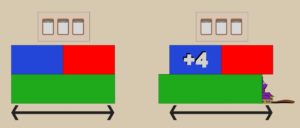
Murals by design are meant to appeal to a wide range of spectators. To differentiate a mural it must be uniquely interactive in both innovative and appealing ways. This is first and foremost found in the structural design of the piece. Most murals are larger than the minimum 160 ft but even at minimum length, a single piece is large enough to be interacted with at multiple points. This suggests that the final piece should either include an area that promotes interaction such as a the Pont des Arts in France or, the final piece should be equally interactive for multiple viewers at multiple points. Both of these can be achieved in both conventional and more specialized means. In a low-tech approach, one might build a mural that is simply a series of corkboards with various opinion polls that are set up for a week and get switched with new polls each night. Each answer to the poll would be assigned a color value, for example, red or blue. If 2/3 polls have blue win, then the boards gets moved towards the blue side, revealing an image on the red side, as is illustrated below .
For a more technological approach, one may create something reminiscent of the r/place social event on Reddit. For a more physical interaction, it’s feasible that one could construct a large, mural-sized, always-on display that could be interacted with via tablets that are connected to the bottom of the display. Allowing visitors to quickly sketch out and idea. To make a more cohesive experience, the color of the drawing would be based on the time of day. For example, if something is drawn at 1pm it could appear light blue. If something is drawn at 3pm it could appear dark orange. Moreover, The display could have a virtual “blockade” that either erases the content of the mural or possibly shields it from erasure by other users. Creating a semi-permanence and sense of posterity to the work.
Either approach has it’s benefits and drawbacks. While the analog design would be easier and quicker to interact with, it also limits the creativity of the user. In the more technological approach, the viewers of them mural literally create it themselves. On the other hand, the analog mural enables the viewers to much more easily work as a team which promotes a sense of community, while as the digital mural makes it much easier for the individual to express themselves without concern for his or her surrounding community.
You must be logged in to post a comment.