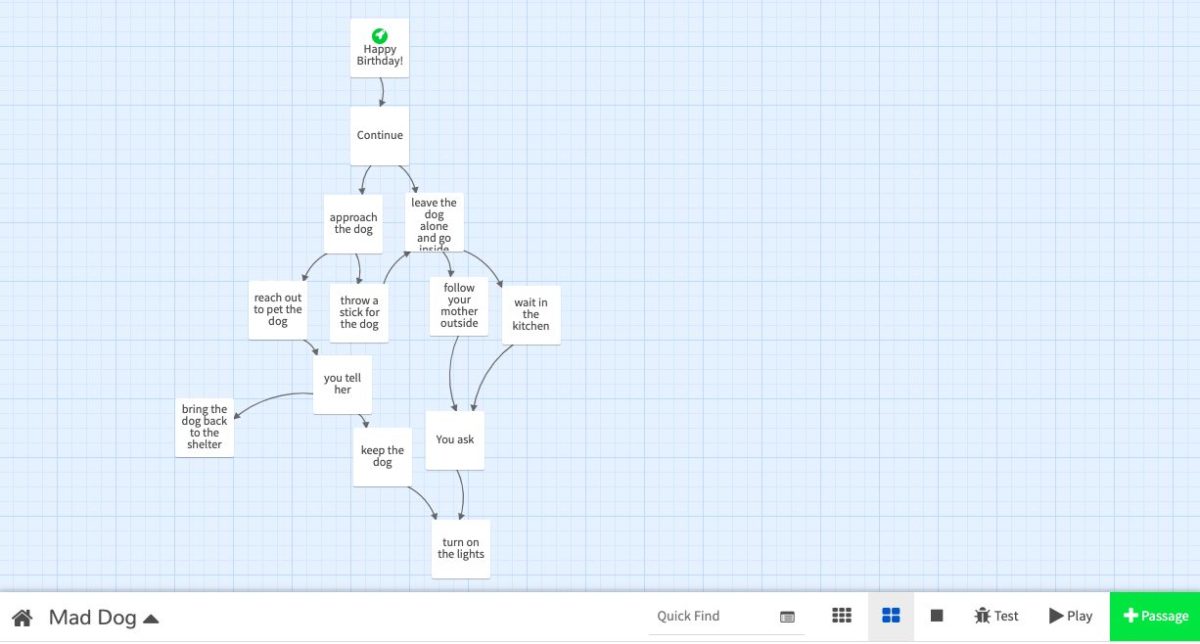
I. Create a story premise for a non-linear, interactive story. Try to make the story short, simple, but meaningful.
A young child receives a dog for their birthday, but something is off about this dog – especially at nighttime. (Based on a ghost story my friend told me when I was younger.)
II. Next, use the Seven Key Steps of Story Structure to clarify main story elements.
(1). Weakness and Need
Weakness (psychological): Overly trusting of others – believes in the good in everyone (this is also their strength), even when they hurt them or put them in danger
Need: Gain a well-rounded perspective, learn that while there is good in the world, there are bad and dangerous things – learn to keep themself safe from these things
(2). Desire: To form a bond with the dog, to survive the dog’s attack
(3). Opponent: The dog
(4). Plan: Take on all the responsibilities to take care of the dog
(5). Battle: Midnight – the dog becoming deranged
(6). Self-Revelation (psychological): The world has good and bad beings, not just good; sometimes certain events change beings and drive them to hurt others
(7). New Equilibrium: Depends on the ending –
Good: The child successfully defeats the dog during its attack, depending on actions, dog escapes or is redeemed, child gains more realistic view of the world and builds a rewarding bond with the dog.
Bad: The child either successfully defeats the dog but severely wounds it, killing it; or is killed by the dog.

You must be logged in to post a comment.