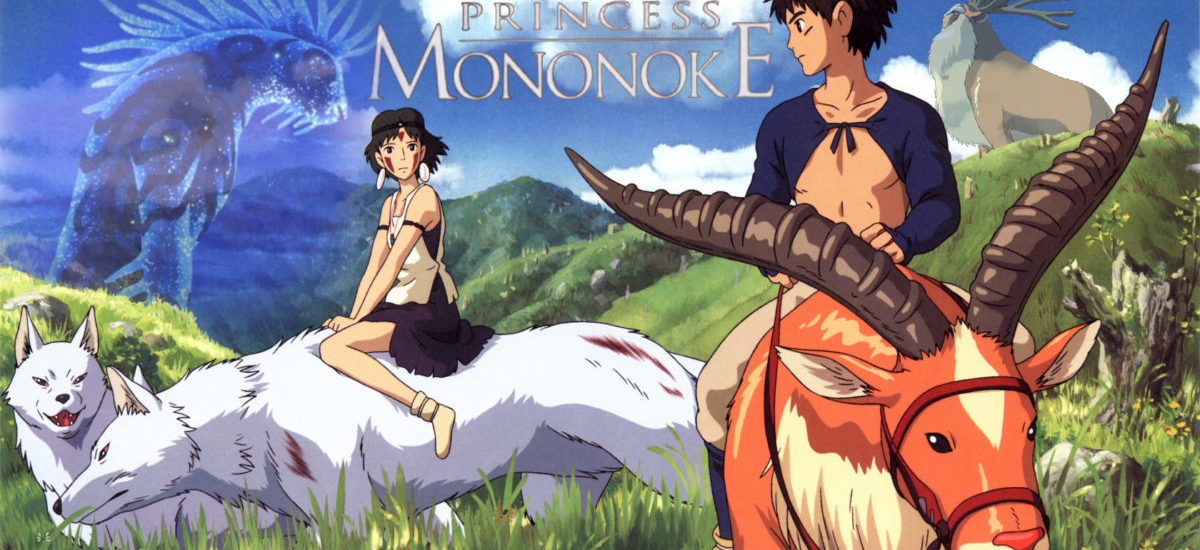
Princess Mononoke Analysis
Okay the first thing I want to say is that there should have been a warning about how gruesome and violent this movie is. I was not prepared and very surprised by this. I also think a lot of this gore wasn’t necessary for the point to be made, in fact I sort of think it takes away from it.
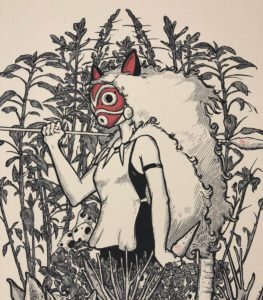
The movie centers on environmentalism in that the forest gods fight against the humans who consume the forest’s natural resources. The movie goes into this point in an extremist way, in that the destruction of the forests create demons out of the animals, and the forest gods want to kill all humans in order for the resources to fully remain. Although Prince Ashitaka wants peace between humans, animals and the forests, San (Princess Mononoke) is a character reflecting an extreme environmentalist, agreeing that eradicating humans or humans fully living like animals is the only possible way for the environment to remain, and Lady Iboshi believes in human supremacy and that the resources are there for humans to take and use, of course the extremism of the movie makes it so she also believes in eradicating the forest. While this level of exaggeration definitely gets the point across, there is no nuance in what environmentalism is and what ways human nature can go about living in existence with nature without an all or nothing mindset.
As for Ashitaka’s curse, I think the point was to reflect the turmoil that is caused by carelessness for the environment. As we are currently experiencing in real life, too much negative human disruption to the environment can cause our health to be poor. Climate change causes new viruses, and other health issues. In an extreme way, Ashitaka’s curse reflects that. He messed with the environment and his health deteriorated as a biproduct.
Princess Mononoke takes a great effort to blur the lines between nature and the humans who are at war with one another. This is seen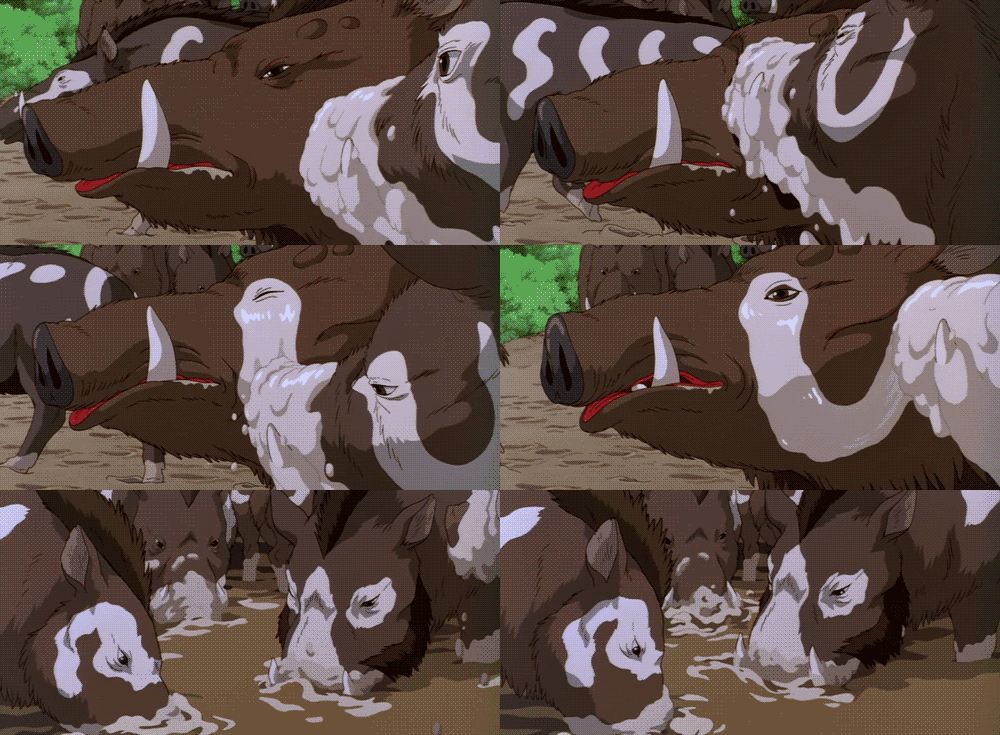 during the battle between the boars and the battle between the two humans. The boars are too proud to approach battling with the humans in a different way other than rushing head on, despite knowing that the humans have laid a trap for them. Similarly, the humans go to war with each other, rushing head on without stopping and thinking. It is in the way that each group interacts with each other that the line between humanity and animals is blurred. This also speaks to the idea of nature vs nurture. Is it that the boars and humans are born to be prideful or is it instilled in them through their culture? By doing this, studio Ghibli develops a storyline in which there are no good guys. This is different from modern day US politics in which one side of the political ideology is attempting to create solutions for modern day problems while the other side’s leaders are comprised of literal white supremacists. Therefore, it is difficult to draw a comparison between a movie set in feudal Japan and modern United States politics. There is also no connection between media and the plot line of this movie.
I think for the time period this movie was released (late 90’s) this movie did a lot for environmentalist movements and in educating some people in human harm to nature. I think for modern day this issue is way more nuanced and the issues are mostly understood enough to do without the extreme exaggerations throughout the movie. I think the cultural aspects of American Nativism were interesting; why was a Japanese film inspired by American Indigenous culture so successful? We often talk about the violence white colonists enact on Indigenous Americans and the violence they give back to colonists creating a sense of good guy versus bad guy, but the violence between Indigenous cultures is often left out. Even though colonization isn’t necessarily touched on, one could argue that westernization (industrialization) is a form of colonization, this movie is a good example of having no good guy in these sort of situations. This I think is a better understanding of the plot and themes than what conclusions could be made about modern media and the push for a good or bad guy.

You must be logged in to post a comment.