Coexistence
The theme of coexistence shows up a lot in Princess Mononoke, as every major character has goals that all run counter to each other. Lady Eboshi, for example, wants to cut down the forest to mine more iron, which she needs for the survival of Iron Town. This need comes at the expense of the forest gods, who obviously need the forest for their own survival. These two groups can’t both get what they want without the other suffering, and thus they have to compromise to achieve anything.
Prince Ashitaka is the sole exception in that his ultimate goal is to teach the forest and the people to coexist with each other. He is by far the most level-headed character in the film, and he helps out both groups equally. For Iron Town, he saves Eboshi from San’s attack, and later helps evacuate the village when the Nightwalker’s curse reaches it. For the forest, he saves San from Eboshi’s ambush and just generally treats the forest and its creatures with the respect that other humans don’t.
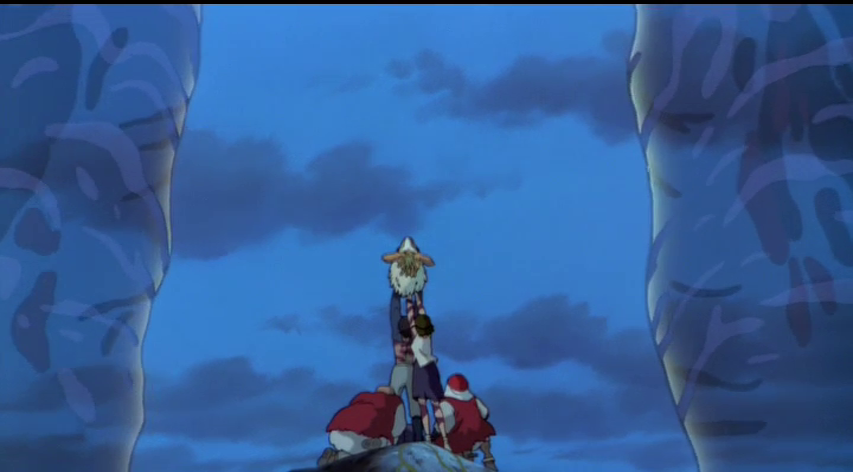
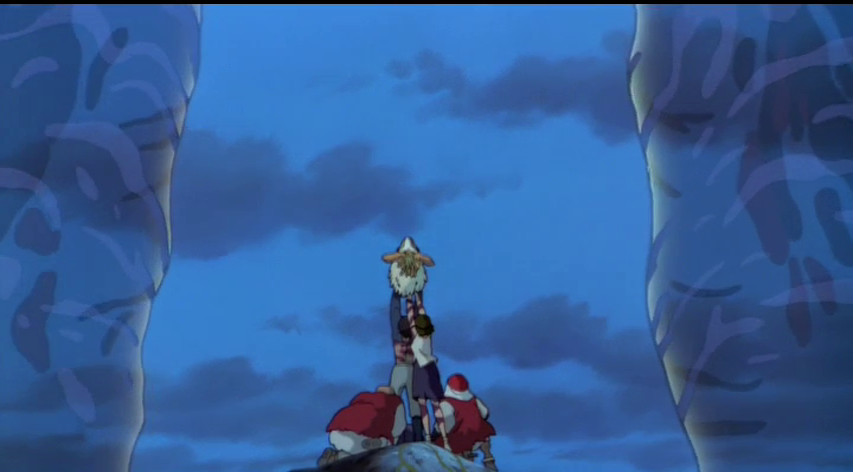
This image, of Ashitaka and San returning the Forest Spirit’s head, represents the moment when the coexistence theme is most prevalent. With Ashitaka representing humans and San representing the forest, it shows how the two groups must be able to come together for the benefit of everyone. Without these two working together, both the forest and Iron Town would’ve been destroyed.
The relationship between human and nature is pretty different in Princess Mononoke from how I normally think of it. It’s very easy to view our relationship with nature as strictly antagonistic, and any decision that benefits us has to hurt nature in some way. Princess Mononoke goes a different direction and says it’s possible for us to make decisions that are mutually beneficial. It’s a hopeful film that shows the value in us making the effort to coexist with nature.
Hatred
While every character in Princess Mononoke has some tangible reason for their actions, they’re all also motivated by their hatred of each other. Lady Eboshi wants the forest for its resources, and she hates the forest gods and San for opposing her. Likewise, the forest gods fight to defend their territory, but they also hate Eboshi and the humans for their constant invasions. Hatred is the driving force for so many of the characters, and it leads to every bad decision they make. It’s also the main reason why they’re unable to coexist until the end.
Ashitaka is the one character who almost never lets his own hatred drive his actions; he “sees with eyes unclouded by hate,” meaning he doesn’t let his emotional state influence his actions. For example, he’s determined to get San out of Iron Town after she fails her assassination attempt, despite the fact that she just tried to kill him minutes earlier. But while he tries to avoid hatred, the curse on his arm doesn’t make it easy, as it sometimes acts on its own based on his feelings. One of the more apparent examples is when Eboshi shows him her hidden gun manufacturing plant in the garden. The mere knowledge that she’s creating so many objects of misery and hate causes his arm to almost cut her down right then and there; it takes all his willpower to not kill her.
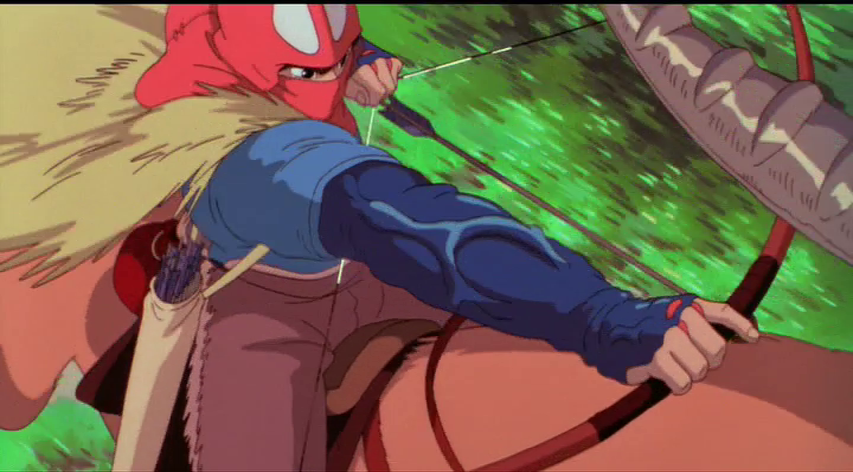
The above image shows the first time Ashitaka’s curse has an effect on him. The hatred in his arm gives him incredible strength, which causes him to shoot arrows with such ferocity that it cuts off the arms of his victim. This is the moment he realizes the pure destructive power that hatred can have, even by accident, and is the only time in the entire film he shows such unconstrained violence. After this moment, Ashitaka successfully suppresses his hatred and refuses to let it influence his actions.
I think this movie has given me a better understanding of how hatred works as a driving force for much of our actions, and of how devastating it can be. Even Ashitaka, who is the most moral character, has the rare moment of losing to his hatred, and the result is more human suffering. It shows how easy it can be to fall victim to your own negative emotions and its ability to unintentionally hurt those around you. The central conflict is only resolved when the characters cast away their hatred for each other, and that really helps convey the message that hatred is unnecessary and should be avoided.

You must be logged in to post a comment.