OUTLINING THE MORAL ARGUMENT
Designing Principle: Frustrated that his dream is deemed unworthy and insignificant, a boy confronts God to learn the grim truth about the world.
Theme Line Techniques: You can’t always decide the outcome of your future.
Moral Choice: Dream must choose between sacrificing his dream to protect others’ or fulfilling his and sacrifice others’.
Moral Problem: What is the stake that forces the characters to hang onto/let go of their dreams?
Characters as Variations on a Theme
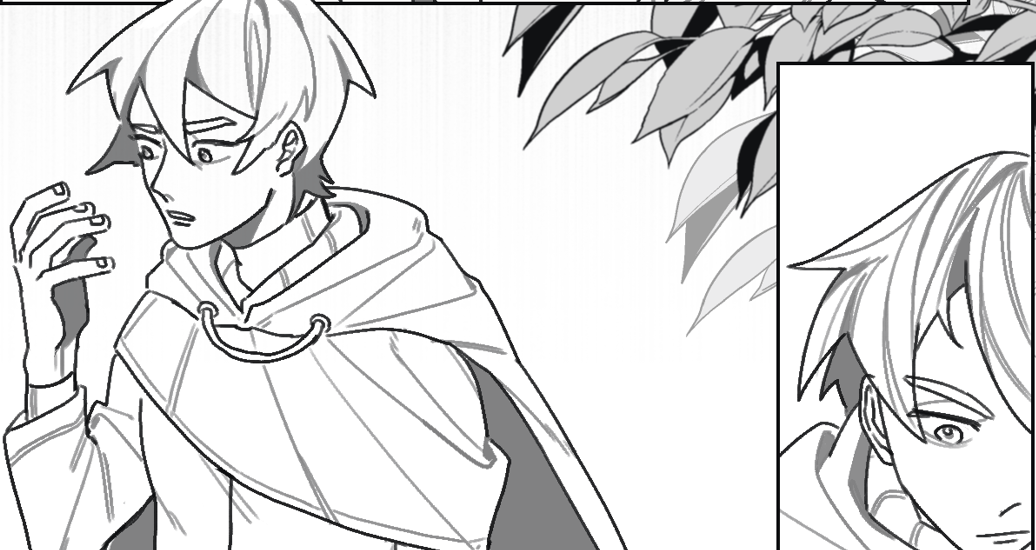
- Dream: He has been on the sideline to others’ pursuits of happiness for millennia without being allowed to achieve one himself. The feeling of making his own decision without being influenced by others is a life-long wish for as long as he can remember.
- The Creator: He has felt the feeling of dying with dreams unfulfilled and wishes for no one to experience such a thing ever again. For the sake of this ideal, he is willing to overlook the feelings of individuals, ie Dream, if it means betterment for the majority.
- Teto: He tries his best to become the shoulders that people can rely on; this means that he would do anything to help fulfilling others’ dreams, even if it costs him his life.
- Will: He sees dreams as fleeting and considers them inferior thinking; therefore, he vows to ruin as many dreams as he can.
Values in Conflict
- Dream: his wish, trust, truth, friends, memories
- The Creator: the fulfillment of others, perfection, balance
- Teto: friends, trust, the fulfillment of others
- Will: dishonesty, manipulation, destruction of others
Fundamentally, The Creator’s sense of balance stems from the fact that Dream cannot have his wish fulfilled; this also includes that Dream must not know/remember the truth of the Realm.
MORAL ARGUMENT
Dream’s Beliefs and Values: Trust, truth, his wish, his friends, memories.
Moral Weakness: He doesn’t fully trust anyone, therefore, it makes it hard for him to rely on or ask for help from others.
Moral Need: It is okay to ask for help and rely on the people that care about you. You can’t always expect the outcome of your decisions.
First Immoral Action
Dream refuses to let Teto know anything about his struggles with amnesia; this hurts Teto by saying that he is not trustworthy enough.
Desire:
Dream wants to decide the decisions that lead to the outcome of his own story.
Drive:
Dream confronts The Creator to learn about himself as an entity and about this world. He purposefully neglects his duty and chooses to stay with Teto where he can remember his decisions. He plans to overturn The Creator when he refuses to acknowledge Dream’s said desire.
Immoral Actions 2
Dream avoids taking his duty seriously and instead resides with Teto.
Criticism: He is being selfish and harming others’ futures for his own benefit.
Justification: Teto’s story world is the only place where Dream can be himself and make decisions of his own will.
Attack by Ally:
When planning to overturn The Creator, Teto lets other residents know about the operation much to Dream’s dismay.
Justification: Dream, though unconsciously, has made decisions that burn bridges between him and other residents.
Obsessive Drive:
When asked if he would rather be shattered but learns the truth about this world or return but forever holds his silence, Dream chooses to former.
Immoral Actions 3
Dream chooses to be shattered and knows the truth about this world, knowing full well that once he is replaced, his memories with Teto would be wiped clean.
Criticism: By choosing to be shattered, Dream undermines the care and trust that Teto has placed in him as a friend.
Justification: If anything, he would like to die knowing that his dream was refused for a reason.
Battle:
For their final confrontation, when Dream is at his weakest, The Creator offers the two options: to abandon his dream and be replaced or to fulfill his dream and sacrifice others’ dreams. Dream chooses the former but quickly disputed with Teto sacrificing himself to fulfill Dream’s wish and keeping him alive. Dream, now heartbroken, proceeds to trap both him and The Creator in this story loop until the rules of the world change for the better.
Final Action Against Opponent
His will to defy The Creator perseveres no matter how many of him is shattered and replaced, trapping both him and The Creator in a story loop where no one’s story can proceed nor end. For the betterment of the Realm, his action is justified.
Moral Self-Revelation:
He realizes that there are people who genuinely care about him and deserve his trust, that it is okay to work with others towards a common goal.
Moral Decision:
After the last bargain with The Creator, Dream agrees to leave his memories and will as the essence if it helps to create a new Realm where no one’s dream is left behind, including the entities made by The Creator.
Thematic Revelation:
Every dream, if for the betterment of others, is worth fulfilling; this means that you need to have the perseverance and willingness to work with/trust others to see it to the end.

You must be logged in to post a comment.